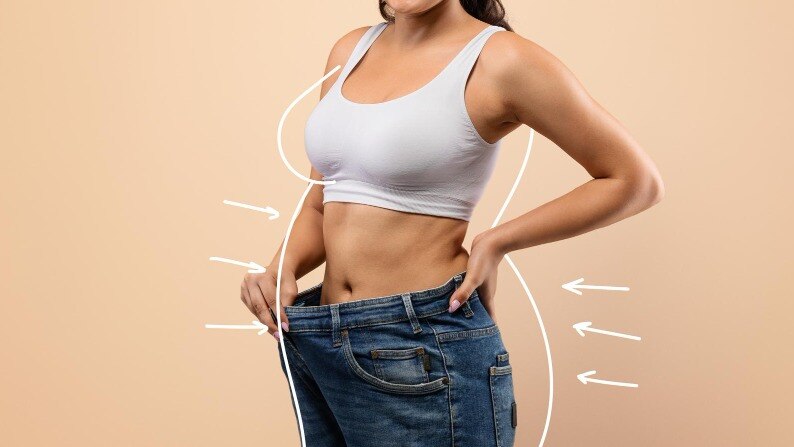
A diet and exercise routine can improve overall health without changing a persistent bulge in the abdomen, flanks, thighs, or chin. You will learn how liposuction removes that localized fat, how to judge whether your skin and fat pattern suit it, and when another procedure or non-surgical option makes more sense.
Key takeaways
- Liposuction removes localized fat beneath the skin, not visceral fat around organs.
- Loose abdominal skin or separated muscles require a tummy tuck, not liposuction alone.
- Good candidates have stable weight, localized fat, and realistic expectations.
- Results can last for years when you maintain a stable body weight.
How does liposuction physically remove localized fat?
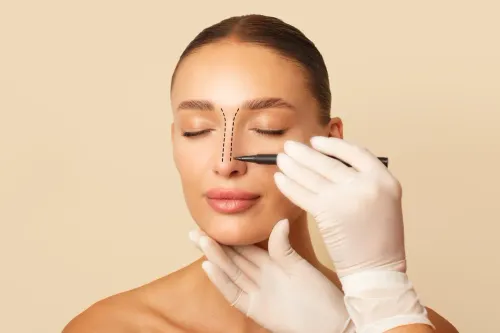
Liposuction removes stubborn fat from beneath the skin, not from around your organs. The surgeon first marks the treatment area and makes small access incisions. Through these openings, the surgeon injects tumescent fluid containing saline, a local anesthetic, and epinephrine. Saline distributes the solution, anesthetic reduces pain, and epinephrine constricts blood vessels to limit bleeding.
The surgeon then guides a thin cannula connected to suction through the fat layer using controlled movements. The cannula loosens and aspirates fat through the small incisions. The procedure is planned around the tissue being removed:
| Fat compartment | What liposuction does | What it does not do |
|---|---|---|
| Subcutaneous fat | Removes selected deposits beneath the skin and changes the local contour | Does not guarantee permanent weight stability |
| Visceral fat | Not reached by the cannula | Does not reduce fat surrounding internal organs, obesity, or related metabolic risks |
Anesthesia choice, the treatment area, and the planned treatment volume affect safety planning. A small, single-area procedure may require a different anesthesia plan and monitoring level from treatment across several areas or removal of a larger aspirate volume.
The surgeon must account for fluid shifts, blood loss, facility resources, and postoperative observation; there is no universal maximum volume that suits every patient.
Removing fat from one area creates a contour change in that area. Remaining fat cells can enlarge after weight gain, and fat can accumulate elsewhere, so liposuction is contour surgery, not a substitute for weight management.
Which areas can liposuction contour, and which need another operation?
Liposuction can contour localized subcutaneous fat in the abdomen, flanks, hips, thighs, buttocks, arms, back, neck, under the chin, and selected male-chest fat patterns. These areas suit treatment when the fat is pinchable and sits above the muscle rather than around internal organs.
Common treatment areas include:
- Abdomen and flanks
- Hips and thighs
- Buttocks and back
- Arms
- Neck and under the chin
- Selected male-chest fat patterns
Suitability depends on the fat compartment and skin quality, not simply on body weight. Loose, thin, or sun-damaged skin may hang after fat removal instead of contracting smoothly, which can worsen folds or unevenness. Hips and arms contouring therefore requires an examination of both the fat deposit and the skin’s elasticity.
The operation must match the tissue causing the problem.
| Option | What it changes | When it fits |
|---|---|---|
| Liposuction | Localized subcutaneous fat | A bulge with adequate skin elasticity |
| Tummy tuck | Excess abdominal skin and separated abdominal muscles | Skin overhang or muscle separation after pregnancy or weight change |
| Arm lift or thigh lift | Major loose skin | Skin excess that liposuction cannot tighten |
| Cellulite treatment | Skin texture and connective-tissue bands | Dimpling; liposuction is not the treatment |
| Stretch-mark treatment | Damaged, stretched skin | Surface marks; removing deep fat will not repair them |
Liposuction can leave cellulite unchanged or make surface irregularity more visible. It also does not remove stretch marks, repair separated muscles, or treat diffuse weight gain.
How can you tell whether your fat pattern is suitable?
A suitable pattern is a localized, pinchable fat deposit rather than weight distributed across the whole body. Stable body weight matters because liposuction contours selected areas; it does not replace weight management or treat diffuse weight gain.
- Check for fat that remains after a stable period of diet and activity, and that you can clearly pinch in one or more defined areas.
- Look for skin elasticity: skin with some recoil is more likely to contract smoothly after fat volume is removed.
- Identify a contour goal, such as reducing a lower-abdominal bulge or flank fullness, rather than reaching a target scale weight or clothing size.
- Separate a fat problem from loose skin, cellulite, stretch marks, or overall weight gain; liposuction does not correct those problems.
Postpone or reject the procedure if you have major loose skin, diffuse weight gain, an untreated medical condition, or smoking that has not been addressed. Delay it when medication-related bleeding concerns need evaluation, or when pregnancy plans make the timing unsuitable.
Your consultation should include medical history and medication review, including prior operations, chronic diseases, smoking, and medicines that affect bleeding. The clinician should perform a physical examination, assess skin quality and elasticity, take photographs, mark the treatment area, and discuss the contour you want.
Ask directly whether the proposed treatment removes fat or is being expected to solve skin texture, stretch marks, or weight-loss concerns.
How does liposuction compare with a tummy tuck and non-surgical fat reduction?
Liposuction is the stronger choice for a clearly localized, pinchable fat deposit when you want a more substantial change in one operation. It requires small incisions, anesthesia planning, swelling management, and postoperative recovery.
| Option | Main problem | Intensity and number of sessions | Recovery and contour change |
|---|---|---|---|
| Liposuction | Localized subcutaneous fat | Surgical treatment; often one planned stage, depending on areas and volume | More swelling, bruising, and downtime; usually produces a more noticeable single-stage contour change |
| Tummy tuck | Excess abdominal skin or separated abdominal muscles | More extensive abdominal surgery; usually one operation | Longer, more demanding recovery; reshapes the abdomen by removing skin and repairing muscle, not just removing fat |
| Non-surgical fat reduction | Small, localized fat deposits without loose skin | No incisions; commonly requires a series of treatments | Less intensive recovery, but a more limited contour change that depends on the technology and treatment area |
The tummy tuck versus liposuction decision depends on which tissue creates the bulge. A tummy tuck is not simply a larger liposuction treatment: it addresses abdominal skin excess and muscle separation, while liposuction removes fat.
Non-surgical fat reduction avoids incisions and anesthesia planning, but each session treats a defined area and the result develops gradually. At Khatri Clinic - Best Clinic in Camp 08048047677, ask which tissue is responsible, how many areas and sessions you need, what recovery involves, and why the proposed method suits your anatomy.
Related service
Body Treatments Body Treatments Specialist in Pune Best Body Contouring & Body Treatments Specialist in Pune Looking for safe, natural-looking body reshaping by an expert? At Khatri Clinic Camp,... View service → |
What should you expect after liposuction, and how long does the result last?
During the first days of liposuction recovery, swelling and bruising, soreness, numbness, and temporary unevenness are expected. Your body is healing, so the first visible shape is not the final contour.
A compression garment is commonly used to support the treated area and limit swelling. Follow your surgeon’s specific instructions about walking, exercise, wound care, bathing, pain medicine, and follow-up visits. Residual swelling can take weeks to months to settle, especially when several or larger areas were treated.
Recognised complications include:
- Contour irregularity, rippling, asymmetry, persistent swelling, or numbness
- Fluid collections, bleeding, or infection
- Blood clots or pulmonary embolism
- Fat embolism
- Fluid shifts or electrolyte disturbances
- Lidocaine toxicity
- Injury to deeper structures
Uneven fat removal and poor skin elasticity raise the risk of an irregular contour. Seek urgent medical care for severe shortness of breath, chest pain, fainting, rapidly worsening swelling, or heavy bleeding.
The result can last for years because removed fat cells do not grow back. Remaining fat cells can enlarge after future weight gain, including in untreated areas, which can change your overall proportions. Liposuction improves a selected contour; it does not prevent weight gain or replace long-term weight management.
Frequently asked questions
How does liposuction physically remove localized fat?
The surgeon injects tumescent fluid through small incisions, then uses a cannula to suction fat cells from beneath the skin.
Which areas can liposuction contour?
Common areas include the abdomen, flanks, thighs, hips, arms, back, chin, and neck. Excess loose skin or separated abdominal muscles need another operation.
How can you tell whether your fat pattern is suitable for liposuction?
Liposuction suits localized, pinchable fat in a person near a stable weight with reasonably firm skin and realistic expectations.
How does liposuction compare with a tummy tuck and non-surgical fat reduction?
Liposuction removes more localized fat through surgery. A tummy tuck removes excess abdominal skin and can repair separated muscles. Non-surgical treatments avoid incisions but usually produce smaller changes.
What should you expect after liposuction, and how long does the result last?
Expect swelling, bruising, compression garments, and a gradual contour change. Once swelling settles, removed fat cells do not return, but remaining cells enlarge with weight gain.