Deciding to undergo breast augmentation with silicone implants involves more than selecting an implant size. It is elective surgery requiring decisions about proportions, implant characteristics, incision placement, surgical technique, recovery, and long-term follow-up.
A thorough consultation should therefore feel more like surgical planning than a sales appointment.
Start With the Surgeon's Qualifications
Patients should establish who will actually perform the procedure and whether that doctor has appropriate training in plastic surgery.
During consultation, it is reasonable to ask about experience with breast surgery, where the operation will be performed, what type of anaesthesia is planned, and how postoperative concerns are handled.
A clinic should also be willing to discuss complications rather than presenting augmentation as risk-free.
Implant Selection Is Based on More Than Cup Size
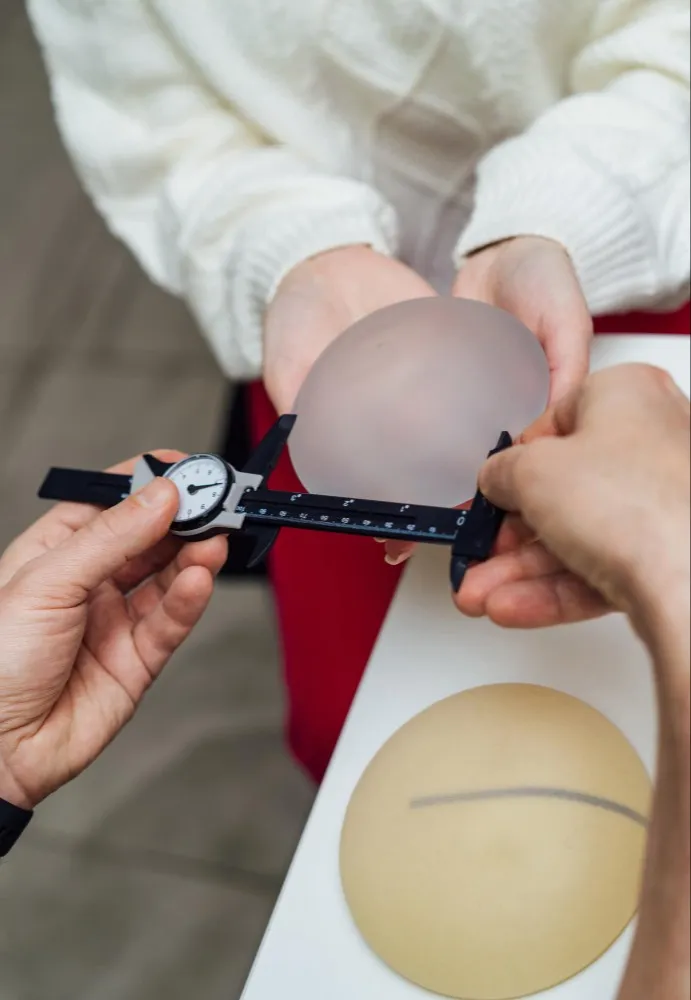
Bra cup sizing varies considerably between brands, making it an unreliable surgical measurement.
Planning commonly considers:
- Chest and breast width
- Existing breast volume
- Skin envelope
- Degree of asymmetry
- Nipple position
- Desired projection
- Overall body proportions
A larger implant is not automatically a better way to achieve cleavage or a particular appearance.
Implant profile and dimensions need to fit the patient's anatomy.
Ask About Implant Information
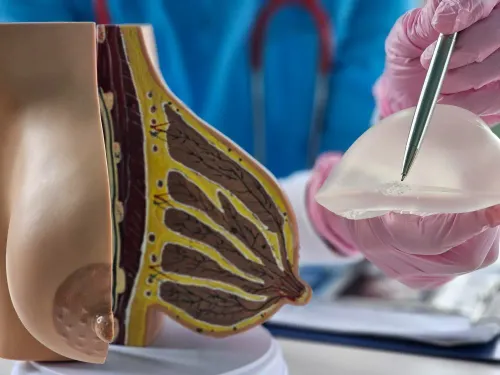
Patients should know the manufacturer and type of implant proposed and should receive appropriate information about its characteristics.
Questions can include:
- Why is this implant being recommended?
- What alternatives are available?
- Where will the implant be positioned?
- Where is the incision likely to be?
- What follow-up is recommended?
- What implant-specific complications should I understand?
- Could I need another operation in the future?
Silicone breast implants should not be viewed as devices that can simply be inserted and forgotten indefinitely.
Understand the Possible Risks
Every surgical procedure carries risk.
Breast augmentation can involve complications such as infection, bleeding, scarring, altered sensation, asymmetry, implant displacement, capsular contracture, and the possibility of revision surgery.
Patients should also receive current information about recognized implant-related conditions and any surveillance relevant to the device being considered.
A balanced consultation discusses both expected benefits and limitations.
Prepare for Recovery Before Surgery
Planning practical support in advance can make recovery easier.
Ask when you can return to work, drive, sleep in your usual position, lift objects, exercise, and resume other routine activities.
People with physically demanding jobs may require different recovery planning from those doing desk-based work.
Look for Individualized Recommendations
Be cautious when every patient appears to receive the same implant or when a particular size is recommended before measurements and examination.
For women considering augmentation in Pune and elsewhere in Maharashtra, choosing a provider should involve comparing surgical expertise and safety standards rather than only procedure packages.
Khatri Clinic - Best Clinic in Camp provides plastic and aesthetic surgery consultations where breast anatomy, goals, and available augmentation approaches can be reviewed before surgical decisions are made.
A well-prepared patient should leave consultation knowing not only what the proposed result may look like, but also why a particular implant and technique have been recommended, what recovery involves, and what long-term follow-up may be necessary.
Keywords