Ageing can make the cheeks, temples, folds, chin, and jawline appear less supported, but several different changes may create that appearance. By the end, you will understand how injectable fillers add structure, how clinicians choose between fillers and other treatments, and what to check before booking treatment.
Key takeaways
- Fillers restore volume by placing gel beneath skin or in deeper tissue planes.
- The cause and location of volume loss guide filler choice and injection depth.
- Ask who will inject you, which product is planned, and how complications are managed.
- Compare fillers with fat transfer, surgery, skin tightening, and muscle-relaxing injections.
How Injectable Fillers Replace Lost Facial Support
Loss of facial support can make the cheeks look sunken, the temples hollow, and folds appear deeper. Dermal fillers place an injectable gel beneath the skin or in deeper soft-tissue planes to restore structure and contour without removing skin. Hyaluronic acid fillers also bind water, creating immediate facial volume.
| Facial change | What filler can do | Important limitation |
|---|---|---|
| Sunken cheeks | Rebuild cheek projection and soften nearby shadows | Excess product can create a puffy or widened face |
| Hollow temples | Add support to a concave temple area | This is a delicate zone requiring precise placement |
| Nasolabial folds | Reduce the fold by supporting the cheek or filling the crease | Filler cannot correct major skin laxity |
| Marionette lines | Soften lines running from the mouth corners toward the chin | Treating the surrounding support may work better than filling the line directly |
| Chin or jawline deficiency | Increase chin projection or sharpen jawline contours | It cannot replace major bone structure or remove loose skin |
| Under-eye hollows | Reduce the shadow from volume loss beneath the eyes | Bags, swelling, or thin skin can make filler unsuitable |
The result depends on why the face looks older: fat-pad movement, bone remodeling, muscle activity, or loose skin. Filler can camouflage selected changes, but it does not reproduce a facelift’s tightening effect. Longevity varies by material, depth, location, and facial movement, so temporary products usually require repeat treatment.
Why the Cause of Volume Loss Determines the Treatment
A consultation starts by identifying what created the hollow or aged appearance, because filler replaces lost support but cannot correct every source of change. During a facial assessment, the clinician compares both sides at rest and while you smile, checks skin elasticity and movement, and studies how shadows change with lighting and expression.
The assessment separates the main causes:
- Fat-compartment change can create a hollow that filler may restore.
- Bone remodeling can reduce the foundation beneath the cheek, chin, or temple.
- Skin laxity creates hanging or folded tissue that filler cannot remove.
- Muscle activity can deepen a crease that responds better to muscle-relaxing treatment.
Filler is more suitable when the problem is a localised loss of support with enough skin elasticity to hold the correction. It may improve sunken cheeks by replacing volume beneath the skin. Temple hollowing requires careful evaluation of depth and anatomy because the area contains important blood vessels.
Nasolabial folds do not automatically mean that the fold itself needs filling. A clinician may assess nearby cheek support first, since adding volume in the wrong place can make the face look heavy.
If loose skin remains after the tissue is gently lifted, filler alone will not reproduce a facelift’s tightening effect. Overfilling can distort facial proportions and movement, so the consultation should end with a clear recommendation for filler, another treatment, or no injection.
What Happens During a Filler Appointment
An appointment starts with a safety decision, not a syringe. During the filler consultation, the injector reviews your medical history, medicines, allergies, previous fillers, pregnancy or breastfeeding status, and the condition of your skin.
FDA safety data for pregnancy and breastfeeding are incomplete, so treatment is usually deferred; active infection or inflammation near the site also requires assessment and resolution first.
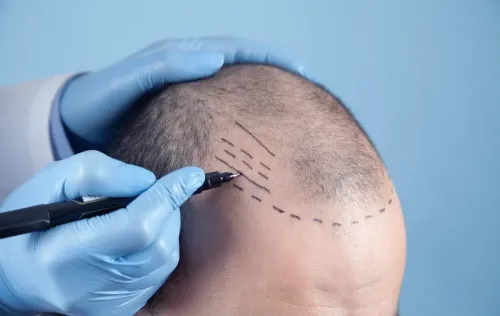
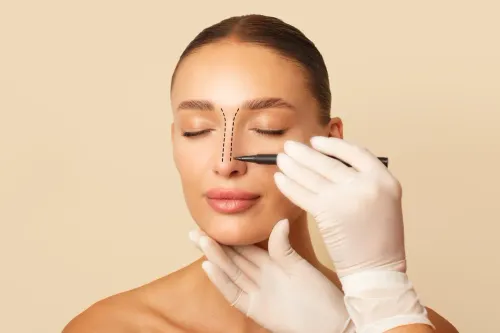
1. Before injection, the injector examines facial movement, volume loss, skin quality, and asymmetry, then photographs and discusses the intended change. Facial marking identifies entry points and treatment boundaries. The skin is cleansed, and topical anaesthesia or local anaesthesia is used when appropriate.
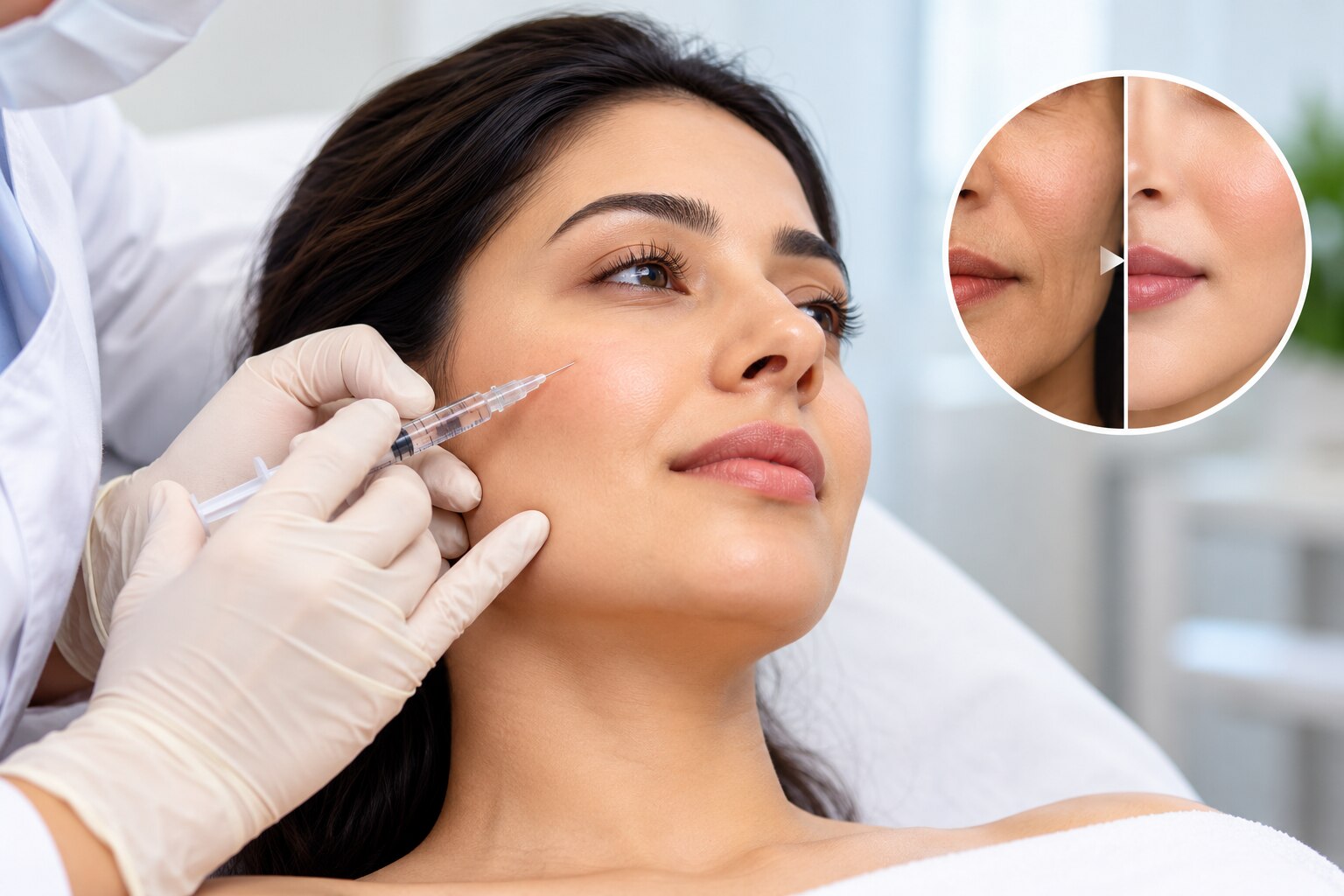
2. During treatment, the injector places filler with a needle or cannula at selected depths, using small amounts rather than treating every hollow at once. The area may be gently moulded, followed by a symmetry and circulation check.
3. Immediately afterward, expect temporary swelling, redness, tenderness, itching, or bruising. Needle trauma, local anaesthetic, and inflammation can make the area look overfilled before the result settles, so do not judge the final shape at once.
Report sudden severe pain, pale or mottled skin, or any visual symptom during or soon after injection immediately. These signs can indicate vascular occlusion, which needs urgent medical assessment. Confirm written aftercare instructions and the injector’s emergency contact before leaving.
How Fillers Compare With Other Ways to Restore or Reshape the Face
The key choice is whether you need added volume, muscle relaxation, gradual collagen production, tissue repositioning, or excess-skin removal. The materials and procedures differ in reversibility, recovery, and the problem they can actually correct.
| Option | Main difference | Best fit |
|---|---|---|
| Hyaluronic acid (HA) | Immediate, water-binding volume; usually temporary and the easiest filler type to treat with hyaluronidase, although correction is not always instant or complete. | Cheeks, lips, folds, chin, and under-eye hollows |
| Calcium hydroxylapatite | Immediate structural support with collagen stimulation; less readily reversed than HA. | Deeper contouring, cheek support, and jawline definition |
| Poly-L-lactic acid | A gradual collagen stimulator that commonly requires a treatment series; it does not create final volume immediately. | Diffuse facial hollowing requiring progressive improvement |
| Fat grafting | Transfers your own fat through a surgical procedure; some transferred fat survives, while the result remains less predictable than a filler injection. | Larger-volume restoration when surgery and recovery are acceptable |
| Botox | Relaxes targeted muscles rather than replacing lost volume or tightening skin. | Movement-related forehead lines, frown lines, and crow’s-feet |
| Thread lifts | Uses inserted threads to reposition mildly lax tissue; lifting is limited and threads can become visible or palpable. | Modest, temporary repositioning |
| Facelift surgery | Removes or repositions excess skin and deeper tissue, producing the most substantial correction of significant laxity. | Loose skin and jowls that filler cannot fix |
Collagen stimulators suit gradual change; HA suits adjustable correction. Choose after identifying whether fat loss, muscle activity, skin laxity, or bone structure causes the concern, because overfilling cannot reproduce a surgical lift.
Recovery, Safety, and Choosing a Qualified Injector
Plan for 24 to 72 hours of swelling, tenderness, redness, or bruising after filler. Avoid pressing or massaging the area unless your injector instructs you to, and follow written filler aftercare instructions about exercise, heat, alcohol, and skincare.
| Finding | Likely course | Action |
|---|---|---|
| Mild swelling, tenderness, or bruising | Improves over several days | Use only approved comfort measures and attend the planned review |
| Increasing pain, pale or mottled skin, coolness, or blistering | Possible vascular occlusion causing tissue ischemia | Contact the injector and seek urgent medical assessment immediately |
| Blurred vision, loss of vision, severe headache, weakness, or confusion | Possible vessel involvement affecting the eye or brain | Treat it as an emergency; do not wait for routine observation |
Before treatment, check that the injector is a licensed medical professional who regularly performs facial injections, reviews your medicines and medical history, obtains informed consent, and explains the product’s material, reversibility, expected duration, and alternatives. Ask what emergency protocol is available and whether appropriate treatments are immediately accessible.
For hyaluronic-acid filler, ask whether hyaluronidase is available for selected problems such as overcorrection, nodules, or a vascular event. It does not guarantee instant or complete reversal. Avoid needle-free devices and permanent products when the provider cannot explain how a bad result would be managed.
Khatri Clinic - Best Clinic in Camp 08048047677 should be assessed by these same questions: who injects, which product and plane they use, how they manage filler complications, and where you go after hours.
Related service
Non Surgical Aesthetic Treatment Non Surgical Aesthetic Treatment Non-Surgical Aesthetic Treatments in Pune at Khatri Clinic Advanced Skin, Hair & Anti-Aging Care by Dr Suddep Yadav Looking for visible anti-aging... View service → |
Frequently asked questions
How do dermal fillers replace lost facial support?
An injectable gel is placed beneath the skin or in deeper soft-tissue planes to restore volume, contour, and support. Hyaluronic acid fillers also bind water, adding to their immediate volumising effect.
Why does the cause of facial volume loss affect treatment?
Sunken cheeks, hollow temples, deeper folds, and skin laxity reflect different structural changes. The treatment plan must match the affected area, tissue depth, and reason for the volume loss.
What happens during a dermal filler appointment?
The injector assesses your facial structure, discusses your goals, selects the treatment areas and product, and places the filler with an injection technique suited to the target tissue plane. Ask for the product name, treatment plan, expected results, and aftercare instructions.
How do fillers compare with other facial reshaping options?
Fillers add targeted volume without surgery. Other options, including fat transfer, lifting surgery, skin-tightening procedures, and muscle-relaxing injections, address different problems and involve different recovery, risks, and results.
How can you choose a qualified dermal filler injector?
Choose a licensed medical professional with relevant training in facial anatomy and injectable treatments. Ask about the product, sterile technique, emergency protocols, complication management, and follow-up care before treatment.