Healthy skin plays an essential role in protecting the body from infection, regulating temperature, and supporting the healing process. While many wounds heal naturally with proper care, some injuries result in significant skin loss that cannot repair itself effectively. In these situations, skin grafting surgery may become the most appropriate treatment to restore skin coverage, promote healing, and improve both function and appearance.
Whether the wound is caused by burns, trauma, surgery, or a chronic medical condition, understanding when skin grafting is recommended helps patients make informed decisions about their treatment.
What Is Skin Grafting Surgery?
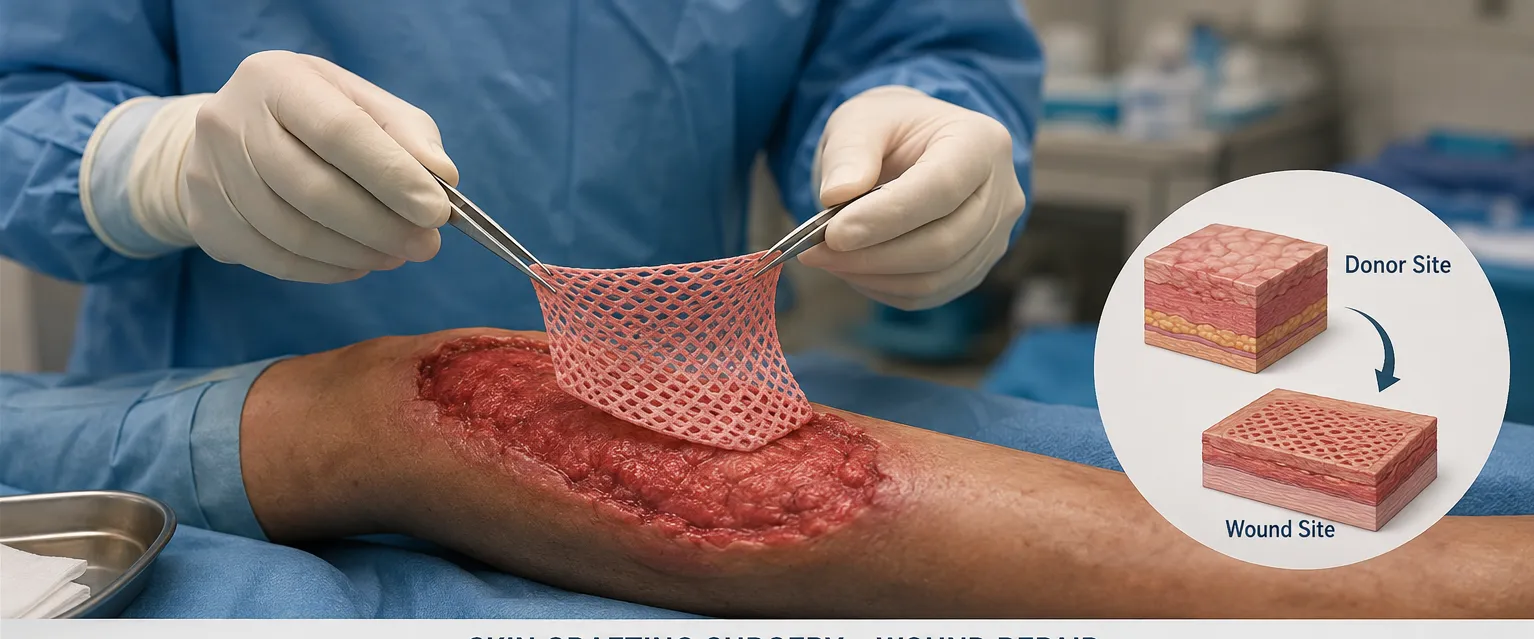
Skin grafting is a reconstructive surgical procedure in which healthy skin is taken from one part of the body, called the donor site, and transplanted to an area where the skin has been lost or severely damaged. Once placed, the graft gradually develops a new blood supply and becomes part of the healing tissue.
The procedure is commonly performed by plastic and reconstructive surgeons to help cover wounds that are too large or too deep to heal properly on their own.
When Does a Wound Need Skin Grafting?
Not every wound requires a skin graft. However, surgery may be recommended when natural healing would take too long or leave significant functional problems.
Common situations where skin grafting may be advised include:
- Deep burn injuries
- Road traffic accident wounds
- Extensive skin loss after trauma
- Chronic non-healing ulcers
- Surgical wounds following skin cancer removal
- Severe infections causing skin damage
- Reconstructive procedures after tissue removal
Early assessment allows the surgeon to determine whether skin grafting will improve healing and reduce future complications.
Types of Skin Grafts
The type of graft used depends on the size, location, and depth of the wound.
Split-Thickness Skin Graft
This graft includes the outer layer of skin and part of the deeper layer. It is commonly used for larger wounds because it covers extensive areas and heals relatively quickly.
Full-Thickness Skin Graft
A full-thickness graft includes both the outer and deeper layers of skin. It is generally selected for smaller areas where appearance is especially important, such as the face, hands, neck, or other visible regions.
The surgeon recommends the most suitable option after evaluating the wound and surrounding tissues.
How Skin Grafting Surgery Is Performed
The procedure is performed under local or general anesthesia depending on the complexity of the wound.
After carefully cleaning and preparing the wound, healthy skin is harvested from a donor site, often from the thigh, buttock, or another concealed area. The graft is then positioned over the wound and secured using fine sutures, staples, or special surgical dressings.
Both the grafted area and the donor site are protected with dressings to support proper healing during the first few weeks.
Recovery After Skin Grafting
Successful healing depends on allowing the graft to establish a healthy blood supply.
Patients are usually advised to:
- Keep the dressings dry and intact.
- Avoid unnecessary movement of the treated area.
- Take medications exactly as prescribed.
- Eat a balanced diet rich in protein and vitamins.
- Attend follow-up appointments for wound assessment.
- Avoid smoking, as it can delay healing.
Initial healing usually begins within the first week, while complete recovery varies depending on the size and location of the graft.
Benefits of Skin Grafting Surgery
When performed for the right reasons, skin grafting offers several important advantages.
These include:
- Faster wound closure
- Reduced risk of infection
- Protection of deeper tissues
- Improved functional recovery
- Better cosmetic outcomes
- Reduced pain from exposed wounds
- Enhanced quality of life during long-term healing
For many patients, the procedure helps restore both physical comfort and confidence after serious injuries.
Choosing the Right Specialist for Skin Grafting
Skin grafting requires careful surgical planning and close follow-up to achieve the best possible results. Factors such as wound condition, blood supply, underlying medical conditions, and overall health all influence the success of the procedure.
Patients in Pune often seek experienced plastic and reconstructive surgeons for the management of burns, traumatic injuries, chronic wounds, and reconstructive procedures. Khatri Clinic - Best Clinic in Camp provides comprehensive evaluation and personalized treatment plans to determine whether skin grafting surgery is the most appropriate solution for each patient's condition.
Timely treatment can make a significant difference in wound healing. When extensive skin loss prevents natural recovery, skin grafting surgery offers an effective way to restore healthy skin coverage, protect underlying tissues, and support long-term functional and cosmetic outcomes.
Keywords