A nose can look disproportionate because of its own shape, or because the chin, lips, cheeks, and profile change how you perceive it. Breathing difficulty also has several possible causes, so you will need more than a cosmetic reference image to choose the right operation. By the end, you will know what to ask during consultation, how procedures differ, and what recovery and results realistically involve.
Key takeaways
- Facial balance depends on the nose’s relationship with the chin, lips, cheeks, forehead, and eyes.
- A blocked nose may involve the septum, turbinates, nasal valves, or more than one structure.
- Ask how the surgeon will assess breathing, facial proportions, and functional goals before surgery.
- Recovery takes time, and final nasal shape can continue settling for months.
How is facial balance judged beyond the nose?
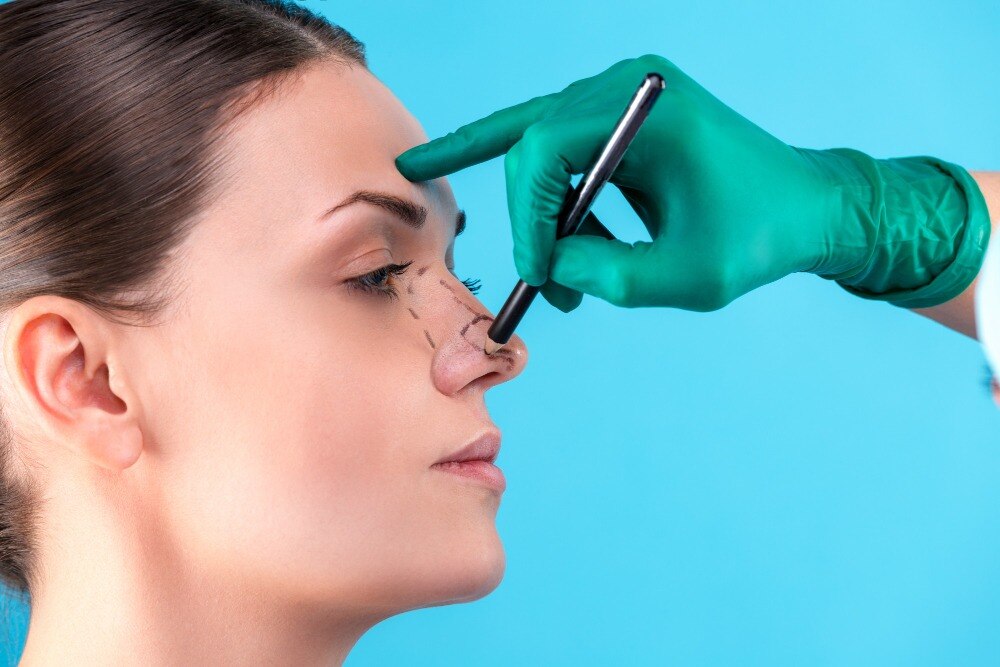
Surgeons judge facial balance by comparing the nose with the chin, lips, cheeks, forehead, and eyes rather than viewing the nose alone. They assess nasal projection, bridge width, tip shape, nostril position, facial profile, and how these features align from the front, side, and three-quarter views.
1. They assess proportion before naming a nasal problem. A recessed chin can make the nose look larger or more projected, while an overprojected chin can make the same nose appear smaller. Discussing chin projection helps separate a nasal concern from a profile proportion concern; it does not automatically mean you need chin surgery.
2. They identify what rhinoplasty can change: a dorsal hump, crooked bridge, broad nasal bones, a drooping or overprojected tip, visible asymmetry, and nostril shape. Changes to nasal width or projection that seem small in millimetres can alter how the lips, cheeks, chin, and entire profile are perceived.
3. They identify concerns better suited to another treatment. A weak chin may require observation, orthodontic or jaw assessment, injectable treatment, or chin surgery depending on its cause and your goals. Cheek volume, lip shape, eyelid or forehead proportions, and significant jaw imbalance are not corrected by rhinoplasty alone.
The aim is a nose that fits your face and functions well, not an identical copy of an idealized photograph. Perfect symmetry is unrealistic because faces naturally differ from side to side, and surgery cannot guarantee a perfectly straight or universally “perfect” nose.
What is causing the breathing problem, and which procedure treats it?
A breathing problem is treated according to the structure blocking airflow, not simply by labelling the nose “crooked.” Septoplasty straightens the internal septum; rhinoplasty changes external shape and support.
| Procedure | What it changes | When it applies |
|---|---|---|
| Cosmetic rhinoplasty | External shape, proportions, and support | Appearance is the main concern |
| Functional rhinoplasty | External framework and airflow-supporting structures | Nasal shape or valve support contributes to obstruction |
| Septoplasty | Internal nasal septum | A deviated septum narrows one or both passages |
| Septorhinoplasty | Septum plus external framework | Internal and external problems coexist |
The assessment starts with obstruction history: when it began, whether one side is worse, whether airflow alternates, and whether allergies or rhinitis cause congestion. Ask about prior trauma or surgery. Examination checks septal deviation, enlarged turbinates, and internal or external nasal-valve narrowing or collapse.
The NOSE questionnaire records symptom severity and later improvement; it does not identify which structure causes the blockage.
Internal examination may be enough for an obvious septal deviation. Nasal endoscopy adds a deeper view of the turbinates, posterior septum, and nasal passages when the cause remains unclear. Imaging is useful after trauma, when sinus or bony anatomy needs assessment, or when surgery requires a detailed structural map.
Treating enlarged turbinates can be necessary, while valve narrowing or collapse may require spreader grafts, batten grafts, or other cartilage-supporting techniques. Septoplasty alone will not restore airflow if the framework or valve remains narrow.
What should happen during a rhinoplasty consultation?
Bring a complete history to your rhinoplasty consultation. Disclose:
- Medical conditions, medicines, supplements, and allergies.
- Cigarette use, vaping, nicotine replacement, and other nicotine products.
- Previous nasal injury, fracture, surgery, or breathing treatment.
- The exact obstruction pattern: one side or both, constant or intermittent, worse at night, during exercise, or with allergies.
- Your appearance concerns and the functional change you want.
The surgeon should perform an external examination, internal examination, side-to-side breathing assessment, and nasal obstruction assessment. Standardised photographs should record your face from the front, sides, and base rather than replace the examination. A NOSE questionnaire can document symptom severity, but it cannot identify the structure causing the blockage.
| Finding | What the consultation checks | Evidence that may guide the plan |
|---|---|---|
| External shape | Bridge, tip, nostrils, asymmetry, and facial proportions | Standardised photographs and examination |
| Internal passage | Septal deviation, turbinate enlargement, and mucosal disease | Internal examination; nasal endoscopy when indicated |
| Valve function | Narrowing or collapse during breathing | Side-to-side assessment, examination, and sometimes endoscopy or imaging |
Define goals in functional and appearance terms, not with a generic desired-nose photograph. Ask which structures cause the problem, whether the plan preserves nasal support, what improvement is realistic, and whether septoplasty, turbinate treatment, valve support, or another procedure is more suitable.
At Khatri Clinic - Best Clinic in Camp 08048047677, use the consultation to connect these questions with an individualized nasal-surgery assessment, then confirm which surgeon will operate and exactly what evaluation is included.
How do surgical approach and structural techniques affect the plan?
Open rhinoplasty and closed rhinoplasty are access choices, not guarantees of a particular result. Open rhinoplasty adds a transcolumellar incision and usually provides broader exposure for complex structural work. Closed rhinoplasty avoids that external incision but limits exposure. Your anatomy and planned maneuvers matter more than the label.
| Approach | Access | Planning implication |
|---|---|---|
| Open rhinoplasty | Incision across the columella plus internal incisions | Useful when the surgeon needs wide exposure for major tip, bridge, asymmetry, or support work |
| Closed rhinoplasty | Internal incisions without a transcolumellar incision | Suitable when the planned changes can be completed through more limited access |
The surgeon may address a dorsal hump, crooked bridge, broad nasal bones, tip droop, excess projection, asymmetry, or nostril shape while preserving or rebuilding the framework. A nasal valve problem changes the plan: spreader grafts can support the internal valve, while batten grafts and other cartilage techniques can reinforce weakened or collapsing areas.
Removing more cartilage is not automatically better. Over-resection can create an inverted-V deformity, pinched tip, alar retraction, or new nasal-valve narrowing. Cosmetic and breathing goals must therefore be planned together when they involve the same cartilage, bones, or supporting tissues. A smaller nose that loses structural support can look less balanced and breathe worse.
What recovery, risks, and long-term expectations should you plan for?
An external splint often remains for about a week. Rhinoplasty recovery can include congestion, bruising, numbness, and temporarily reduced smell. Follow your operating surgeon’s timetable for strenuous activity, contact sports, pressure on the nose, sleeping position, and glasses placement; generic schedules cannot replace those instructions.
Plan for swelling to improve substantially during the first several weeks, not for the final result to appear immediately. Tip definition and subtle asymmetry can change for many months, and thick skin, extensive surgery, or revision rhinoplasty can prolong refinement.
A technically successful operation cannot guarantee a perfectly straight or perfectly symmetric nose because healing, cartilage memory, skin thickness, and pre-existing asymmetry influence the result.
Ask your surgeon how the plan addresses these possible rhinoplasty risks:
- Bleeding, infection, persistent obstruction, altered or reduced smell, and numbness
- Palpable or visible irregularities, scarring, asymmetry, and dissatisfaction with appearance
- Additional treatment or revision surgery if function or appearance remains unsatisfactory
Nicotine and surgery require specific discussion. Tell the surgeon about cigarettes, vaping, nicotine gum or patches, and every other nicotine product; nicotine reduces blood flow and impairs wound healing. Follow the prescribed cessation interval rather than assuming vaping is harmless.
Rhinoplasty is generally deferred until nasal and facial growth are substantially complete. Adults also need stable goals and realistic expectations. Discussing chin projection can clarify facial proportions—a recessed chin can make the nose look larger—but it does not mean chin surgery is required.
Frequently asked questions
How do surgeons judge facial balance beyond the nose?
They compare nasal projection, bridge width, tip shape, nostril position, and profile with the chin, lips, cheeks, forehead, and eyes from front, side, and three-quarter views.
What can cause breathing problems, and which procedures treat them?
Breathing problems can involve a deviated septum, enlarged turbinates, narrowed nasal valves, or multiple structures. Septoplasty, turbinate reduction, and nasal valve repair address those problems; functional rhinoplasty may combine structural changes with cosmetic goals.
What should happen during a rhinoplasty consultation?
The consultation should cover your breathing symptoms, medical history, prior nasal injuries or surgery, facial proportions, examination findings, goals, surgical options, risks, recovery, and realistic limits.
How do surgical approach and structural techniques affect the plan?
An open approach adds a small incision across the columella for wider structural access, while a closed approach uses incisions inside the nose. Grafts, cartilage support, osteotomies, and tip techniques are selected according to anatomy and function.
What recovery, risks, and long-term expectations should you plan for?
Plan for swelling, bruising, congestion, activity limits, and follow-up visits. Discuss bleeding, infection, numbness, asymmetry, persistent obstruction, aesthetic dissatisfaction, revision surgery, and the time needed for the nose to settle.