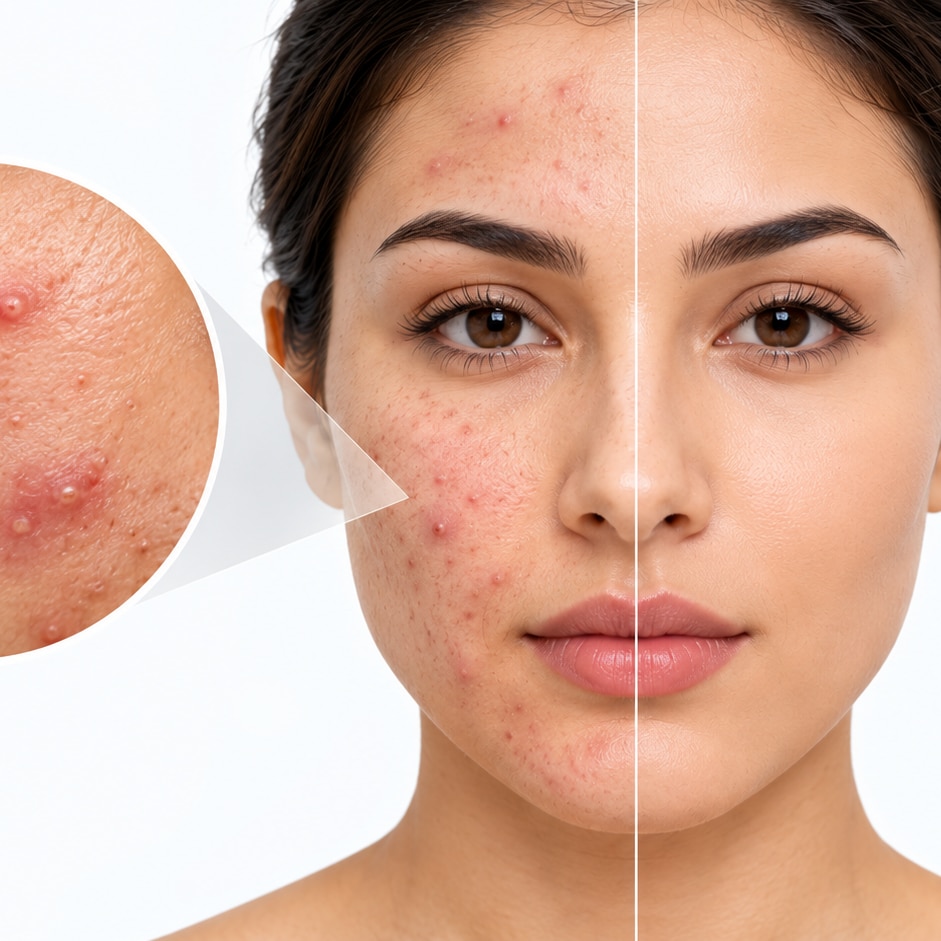
Acne that keeps returning, forms painful lumps, or leaves marks needs more than a cycle of new cleansers. By identifying the condition correctly, matching treatment to severity, and allowing enough time for each plan to work, you can replace trial-and-error with a safer path to control.
Key takeaways
- Persistent acne keeps adding new lesions instead of clearing between flare-ups.
- A dermatologist grades severity by lesion type, number, location, and scarring risk.
- Judge acne medicines only after using them consistently for the prescribed period.
- Treat active acne first; address dark marks and scars as separate concerns.
Is It Persistent Acne or a Different Skin Problem?
Persistent acne keeps returning over weeks or months, with comedones, papules, pustules, or deeper nodules that never fully clear. Occasional breakouts are limited episodes that settle between flare-ups and do not steadily add new lesions, scars, or dark marks.
Use these clues to separate acne from look-alike conditions:
1. Folliculitis causes many small, similar-looking bumps centred on hairs, often itchy or tender after shaving, sweating, friction, or tight clothing. It may need a different treatment from acne.
2. A rosacea acne-like rash usually affects the central face and comes with flushing, burning, persistent redness, visible small blood vessels, or eye irritation. Blackheads and whiteheads point more strongly toward acne.
3. Hidradenitis suppurativa causes painful, deep lumps in the armpits, groin, inner thighs, or under the breasts. Recurrent drainage, rope-like scars, or tunnels beneath the skin require medical assessment.
4. Medication-related acne can begin after corticosteroids, testosterone or other anabolic hormones, lithium, or certain anticonvulsants. Tell your clinician when the eruption began; do not stop a prescribed medicine without advice.
5. Adult-onset acne that follows a premenstrual pattern, or occurs with excess facial hair, irregular periods, or scalp hair loss, can signal androgen influence rather than a need for endless product changes.
Ask a dermatologist to examine you when acne is painful, scarring, widespread, suddenly severe, resistant after a properly used treatment course, or difficult to distinguish from folliculitis, rosacea, or hidradenitis suppurativa. Bring your medication list and photographs of earlier flares.
How a Dermatologist Measures Acne Severity
A dermatologist measures acne severity by examining the pattern, lesion type, and damage—not by counting one bad breakout. The assessment distinguishes non-inflammatory comedones from inflammatory acne and records how widely it has spread.
- Lesion count and type: open comedones (blackheads), closed comedones (whiteheads), papules, pustules, and painful acne nodules.
- Body sites: face, chest, shoulders, upper back, and any areas hidden under clothing or hair.
- Damage: depressed or raised scars, persistent redness, and dark or light post-inflammatory marks.
- Symptoms: tenderness, deep pain, itching, drainage, and whether touching or sleeping on the area hurts.
- Timing: when the acne began, whether flares follow a menstrual pattern, and whether adult acne hormonal symptoms appeared after adulthood.
- Androgen-related signs: excess facial or body hair, irregular periods, scalp hair thinning, or rapid adult-onset acne.
- Medicines and health history: corticosteroids, testosterone or other hormones, lithium, anticonvulsants, supplements, and conditions that affect treatment choices.
- Previous treatment response: product names, dose or application frequency, duration, side effects, and whether acne returned after stopping.
The dermatologist then considers scarring risk, psychological distress, and the speed of new lesions alongside the examination. Acne that resists appropriate treatment, suddenly appears in adulthood, or comes with androgen-related symptoms deserves evaluation for a hormonal or medication-related contributor rather than repeated product changes. The findings guide treatment intensity and follow-up.
The Treatment Ladder: From Topicals to Isotretinoin
Treatment is usually built around severity, lesion type, body sites, scarring, pregnancy plans, and what you have already tried. Combining medicines that target different acne mechanisms usually works better than repeatedly switching between single products.
- A benzoyl peroxide acne treatment reduces acne-causing bacteria and inflammation. Pair it with adapalene or another topical retinoid rather than using an antibiotic alone.
- Adapalene unclogs follicles, prevents new lesions, and supports maintenance after inflammatory acne settles. Other topical retinoids follow the same principle but differ in strength, tolerability, and prescribing requirements.
- Azelaic acid suits acne with lingering dark marks or retinoid irritation. It can be used alone in milder disease or combined with another topical medicine.
- Topical antibiotics belong in a limited, supervised regimen with benzoyl peroxide. Do not use them indefinitely or as monotherapy.
- Oral antibiotics for acne are reserved for more extensive inflammatory acne, painful lesions, or inadequate response to topical treatment. They are time-limited and paired with topical therapy, not used as permanent maintenance.
- Combined oral contraceptives or spironolactone can help selected patients with premenstrual flares or androgen-related signs. They require a medical review for contraindications, monitoring, and pregnancy restrictions.
Isotretinoin is considered for severe, scarring, nodular, or treatment-resistant acne. It requires prescription monitoring and strict pregnancy-prevention precautions because retinoids are avoided during pregnancy; tetracycline antibiotics also require pregnancy-specific avoidance. Expect meaningful improvement after 6 to 8 weeks and reassessment around 12 weeks, not a decision based on the first irritated fortnight.
How to Use Acne Medicines Long Enough to Judge Them
A fair acne treatment timeline starts after consistent use, not after a few applications. Follow the prescribed product instructions and record your start date so irritation or slow progress does not lead you to switch too soon.
1. Cleanse gently, pat dry, and wait until skin is fully dry before applying adapalene. Use one pea-sized amount for the entire acne-prone area, not a separate blob on each spot. Start every other night if your skin is sensitive, then increase to nightly use as tolerated.
2. Apply benzoyl peroxide as a thin, even layer or use it in a prescribed combination product. Benzoyl peroxide irritation includes burning, redness, dryness, and peeling; reduce frequency, use less product, and add moisturiser rather than scrubbing or abandoning treatment. Stop and seek advice for swelling, blistering, or severe pain.
3. Keep the acne treatment routine simple: gentle non-abrasive cleanser, medicine, then a non-comedogenic moisturiser. If adapalene stings, apply moisturiser first, let it absorb, and then use adapalene. Do not squeeze lesions or add several exfoliating products.
4. Use broad-spectrum sunscreen rated SPF 30 or higher every morning. Sun exposure can worsen irritation and make red or brown post-acne marks linger.
5. Apply a missed dose when the next scheduled dose is not close; otherwise skip it. Never double the amount.
Visible improvement often begins after 6 to 8 weeks. Arrange a review at about 12 weeks to assess new lesions, irritation, scarring, and whether the plan needs changing.
When Active Acne Is Controlled, Treat Marks and Scars Separately
A red, tender bump, whitehead, or deep nodule is active acne; it is still creating inflammation and can leave another mark. Active acne versus acne scars is not a cosmetic distinction: flat discoloration and altered skin texture need different decisions.
| Finding | What it means | Usual next step |
|---|---|---|
| Active acne | Comedones, papules, pustules, or nodules | Control inflammation with an acne treatment plan |
| Post-inflammatory hyperpigmentation | Flat brown, gray, or red marks left after inflammation | Prevent new lesions, use sunscreen, and consider pigment-directed care after control |
| Structural scar | A depressed atrophic scar or raised, firm scar | Assess separately for scar-directed treatment |
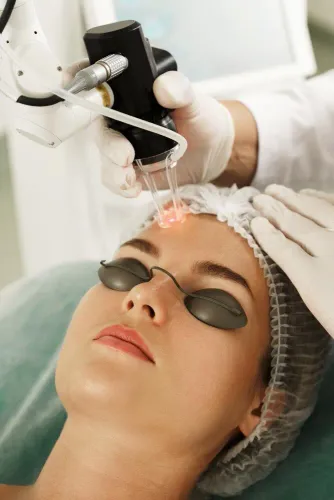
A chemical peel for acne marks does not stop new nodules, and fractional CO2 laser acne scars treatment cannot prevent scars from lesions that are still forming.
Peels, laser treatment, microneedling, and other procedures vary in benefit according to skin type, scar pattern, device, and operator; treating active inflammation first gives a clearer and safer result.
Do not squeeze, scrub, or pick. Use a gentle cleanser, non-comedogenic moisturiser, and broad-spectrum sunscreen while your acne is being treated, because irritation and ultraviolet exposure can deepen visible marks.
A dermatologist-led plan at Khatri Clinic - Best Clinic in Camp 08048047677 can distinguish post-inflammatory hyperpigmentation from true scarring, check medication safety, and decide when a procedure is appropriate. A painful individual nodule may respond to an intralesional corticosteroid injection, but that spot treatment does not replace treatment for widespread acne.
Related service
Cosmetic Dermatology Specialist in Pune – Khatri Clinic Struggling with stubborn acne scars that affect your confidence? At Khatri Clinic, Pune, advanced dermatology... View service → |
Frequently asked questions
How can you tell persistent acne from occasional breakouts?
Persistent acne keeps returning over weeks or months and continues adding comedones, papules, pustules, or deeper nodules. Occasional breakouts settle between flare-ups without steadily adding new lesions, dark marks, or scars.
How does a dermatologist measure acne severity?
A dermatologist considers the type and number of lesions, affected areas, inflammation, nodules, and evidence of dark marks or scarring before selecting treatment.
When is isotretinoin considered for acne?
Isotretinoin belongs near the top of the treatment ladder and requires medical supervision. A dermatologist considers it when acne is severe, scarring, or has not responded adequately to appropriate treatments.
When should acne marks and scars be treated?
Control active acne first, then assess dark marks and scars separately. Their treatment depends on whether the remaining change is pigmentation, redness, depressed scarring, or raised scar tissue.